





TECHNOLOGY
SCROLL DOWN
The Technology Behind Modern MIS Foot & Ankle Surgery
Ortholucent Technology Built for MIS
GLW Medical’s Ortholucent Technology platform brings together implant and instrument solutions for orthopedic fixation. Built around select hybrid titanium-composite designs, Ortholucent Technology is intended to reduce radiographic artifact on X-ray, CT, and MRI compared with traditional metal implants, which may support visualization during imaging as described in the applicable product labeling. Across screws, nails, plates, MIS guides, and single-use instruments, the platform is engineered to support procedural efficiency and surgical versatility across indicated applications.
Each GLW Medical implant is intended for use in accordance with its cleared indications, including the fixation of bone fractures and osteotomies, as described in the applicable Instructions for Use (IFU) and product labeling.
Design Features

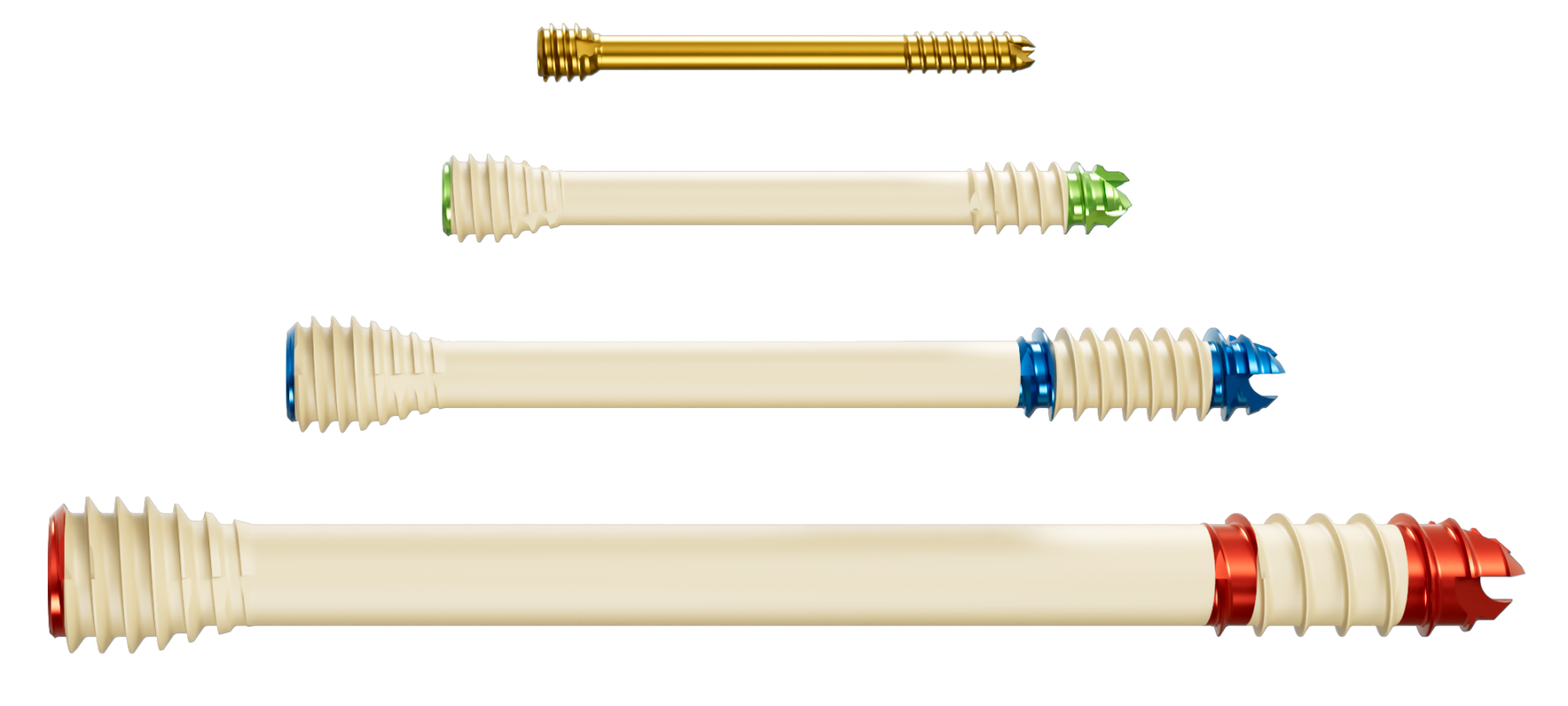
Designed with a titanium core and polymer reinforcement to support structural integrity, thanks to the combination of a thin titanium core and a PEEK / carbon fiber reinforced polymer.

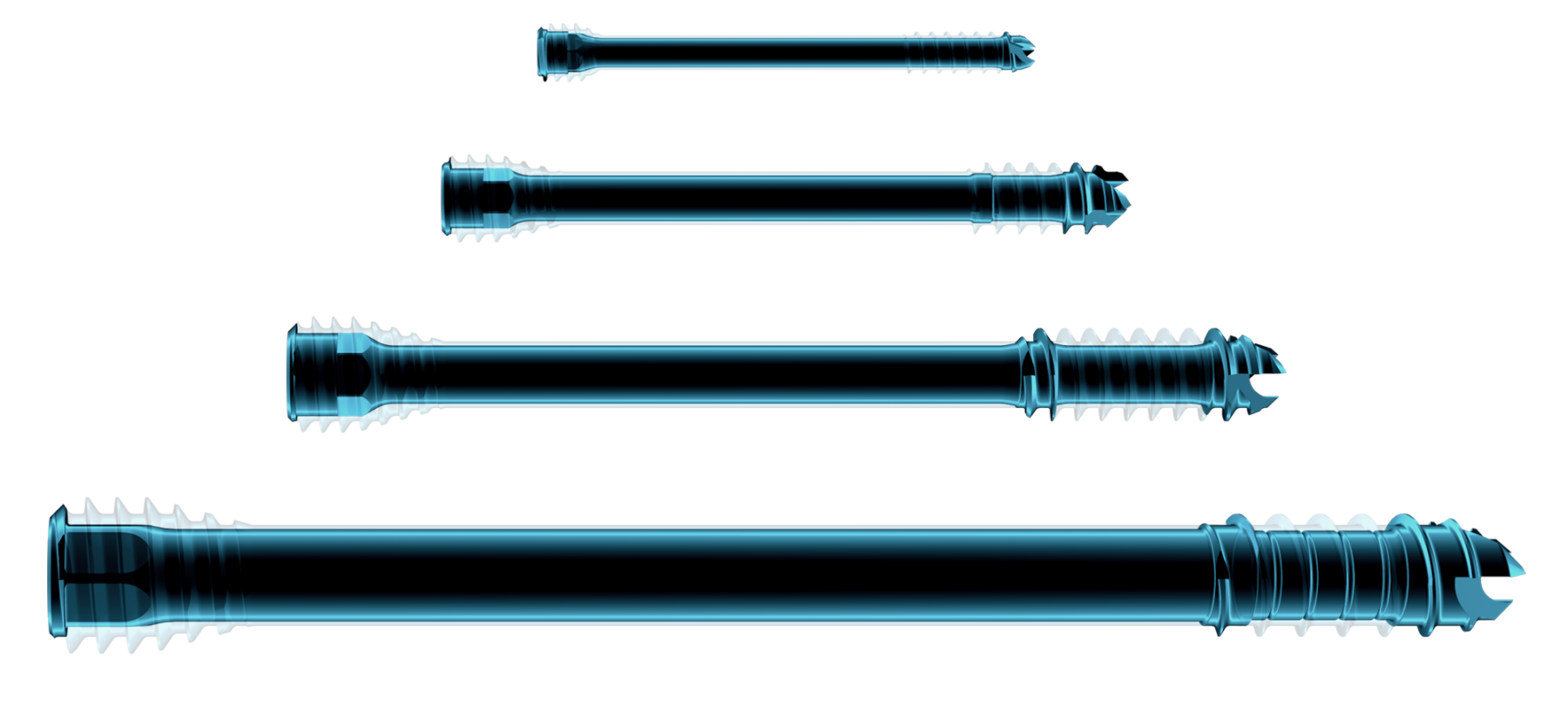
Designed to support radiographic visualization of bones and joints and other imaging techniques, which can help surgeons assess fracture reduction and post-operative healing.

Polymer-based components are designed to reduce radiographic artifact compared with traditional all-metal constructs.

Designed for Reproducibility
Consistency by Design. Confidence in Execution.
GLW MIS Systems are engineered to make critical steps of minimally invasive surgery more controlled, repeatable, and efficient. Procedure-specific guides and jigs help translate the surgical plan into precise, defined actions, supporting consistent positioning, alignment, and implant placement while reducing reliance on freehand technique.
By integrating guidance into the workflow, GLW MIS Systems are designed to help reduce procedural variability and support reproducible execution across cases. The result is a standardized approach that preserves surgeon control while helping teams perform each procedure with greater confidence and consistency.
Engineering and Production of Medical Implants
and Instruments
Additive Manufacturing
Additive manufacturing (3D printing) enables digital design and manufacturing processes that may increase flexibility and efficiency in certain manufacturing operations.
GLW Medical additive manufacturing uses computer-aided design (CAD) software or 3D object scanning data to guide hardware in depositing material into precise geometric forms. As its name implies, additive manufacturing builds an object by adding material layer by layer. In contrast, traditional manufacturing methods may require material removal through milling, machining, shaping, or similar processes.
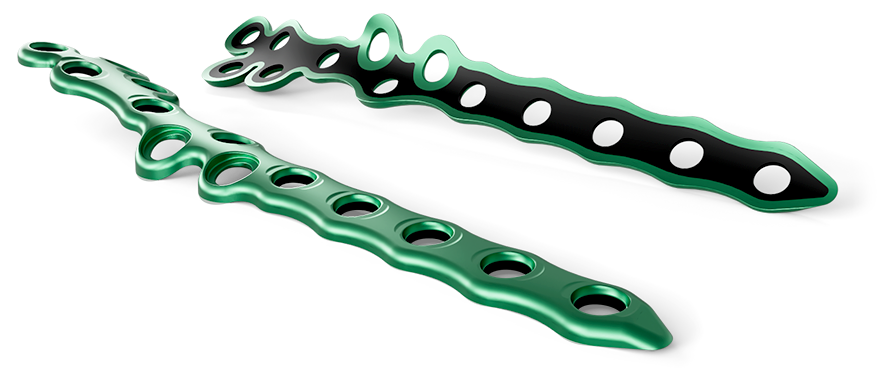
Additive manufacturing can support complex geometries and streamlined fabrication workflows. GLW Medical uses 3D printing to manufacture thin-walled titanium structures for ortholucent technology applications. Complex anatomical design features may be incorporated based on product specifications and design requirements. Design characteristics such as smoother edges and anatomical contouring are intended to support product fit and design objectives. Efficient material usage may also help reduce manufacturing waste.
Hybrid Materials
and Manufacturing
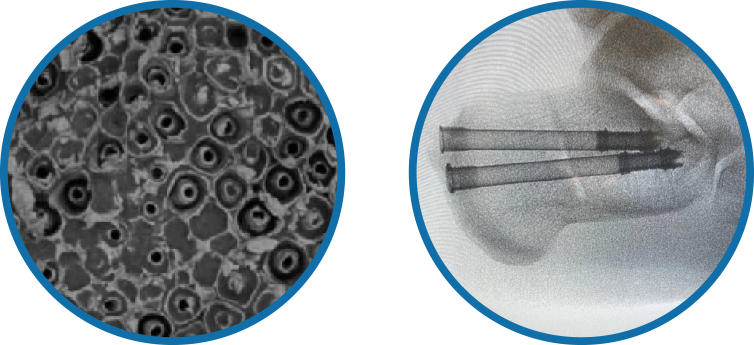
The titanium implant reinforced with PEEK is designed to support improved visualization on plain radiography and may reduce imaging artifact compared with traditional all-metal constructs. This feature may assist physicians in assessing the implant and surrounding anatomy during postoperative imaging.

Reinforced PEEK overmold

Titanium core ring markings to identify where threads begin

Visualization of bones and joint spaces
Proprietary TI-PEEK bonding
PEEK engages with a proprietary titanium micro-structure.
The bond is engineered to meet mechanical performance requirements (the shear strength is equivalent to PEEK strength).
Injection Molding
High temperature and pressure of injection molding process ensures complete integrated bond between PEEK and titanium. Economic use of PEEK minimizes waste and cost.
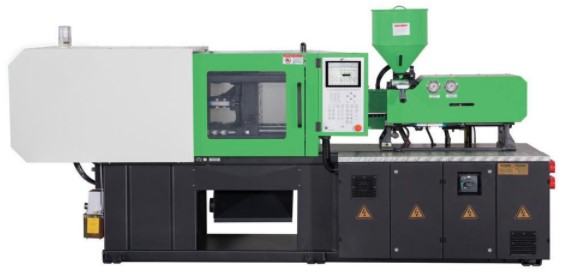

Zero Waste
We are focused on improving manufacturing sustainability through proprietary additive manufacturing (3D printing) and injection molding processes intended to reduce material waste.
Patented Technology
GLW Medical’s MIS portfolio combines patent-pending radiolucent guides with patented ortholucent implants designed to support minimally invasive foot and ankle procedures. Featuring single-use radiolucent targeting guides and procedure-specific instrumentation, the system is engineered to support intraoperative visualization and streamlined procedural workflow in anatomically constrained settings.
For surgeons performing MIS, implant and instrumentation visibility can be critical. GLW Medical’s radiolucent and ortholucent design approach is intended to support visualization under X-ray and procedural workflow when access and exposure are limited.
Together, these technologies form a platform designed to support orthopedic applications for minimally invasive foot and ankle surgery, pairing imaging-friendly design with a protected intellectual property position that can support broader portfolio expansion across orthopedic applications.
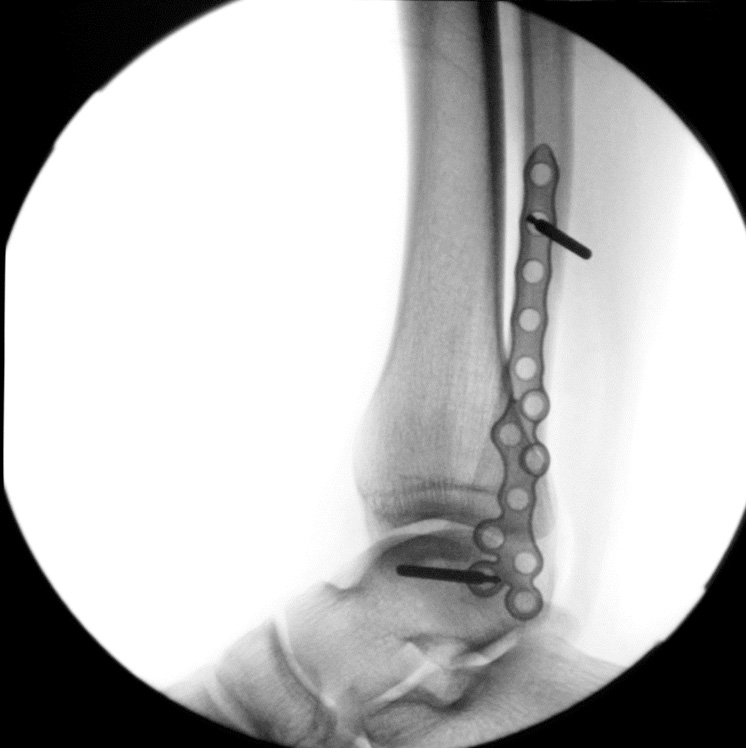

18 issued or pending

510(k): 5 clearances

Titanium and specially formulated peek /
carbon fiber peek
Proprietary additive manufacturing (3D printing) and injection molding process
FDA (510K) cleared plates
manufactured using
additive manufacturing at scale
Variable Angle Locking
Patented PEEKLOC™
Locking Screw Technology
PEEKLOC™ features a low-profile hybrid plate-screw interface design with multidirectional locking. The system is designed to support screw placement within the plate hole, with locking at a torque range of 1.5–2.5 Nm, as specified in the applicable instructions for use. The plate and locking screws are manufactured from Ti6Al4V titanium alloy. The plate incorporates a PEEK-reinforced underside designed to support locking performance and allow angled screws to remain flush with the plate surface. The plate is manufactured using additive-manufactured titanium and injection-molded PEEK components.
Design Features
No cold welding between plate and screws.
Screws can pivot freely by ± 15° in all directions for intended positioning.
Self-countersinking adds more depth below the plate for a flush mounted screw and 2 mm deep engagement for the T15 driver.